عربة التسوق
0

Most honey on supermarket shelves looks the same: clear, golden and runny. Raw honey often looks different. It may be thicker, cloudier, or partly crystallised. The difference comes down to two things that happen after the honey leaves the hive: heating and filtering.

What Is Raw Honey?
Raw honey is honey taken from the comb, strained to remove wax and bits of bee, and put in the jar. It isn't heated beyond the warmth it would meet in a hive, and it isn't finely filtered. It keeps its natural pollen, its enzymes, and the aroma of the flowers it came from.
What Does Processing Do?
Commercial honey is often processed so that it looks uniform and stays liquid on the shelf for a long time.
- Heating (pasteurisation): Honey is warmed to high temperatures so it flows quickly through machinery and is slow to crystallise.
- Fine filtering (ultra-filtration): Honey is pushed through very fine filters, often under pressure, which removes most of the pollen. Without pollen, it becomes much harder to tell where a honey came from.
- Blending: Honeys from different sources, sometimes different countries, are mixed for a consistent colour and taste.

Why Heat Matters
Honey naturally contains enzymes added by the bees, such as diastase. Strong heat breaks these down. Heat also raises the level of HMF, a compound that forms as honey is heated or ages. Food standards such as the international Codex honey standard set minimum enzyme levels and maximum HMF levels, and labs use these two measures to check whether a honey has been overheated or stored badly.
Heating also dulls flavour. Many of the delicate aromas that make Sidr different from Sumar, or Kyrgyz white honey different from mountain honey, are the first things to fade.
Raw vs Processed Honey at a Glance
| Raw honey | Processed honey | |
|---|---|---|
| Heating | Not heated beyond hive temperatures | Often heated to high temperatures |
| Filtering | Lightly strained | Often finely filtered |
| Pollen | Kept | Mostly removed |
| Appearance | May be cloudy or crystallised | Clear and runny |
| Flavour | Distinct, depends on the flowers | Milder, more uniform |
| Origin traceable by pollen | Yes | Difficult |
How to Choose
- Read the label. Look for "raw" and a named origin, not just "product of several countries".
- Don't fear crystals. Crystallisation is a natural process. It is not a sign that honey has gone bad.
- Ask about testing. A good brand can tell you how its honey is checked.
- Be wary of very cheap honey. Real raw honey from a specific region costs more to produce.
Experience the Purity of Raw Honey
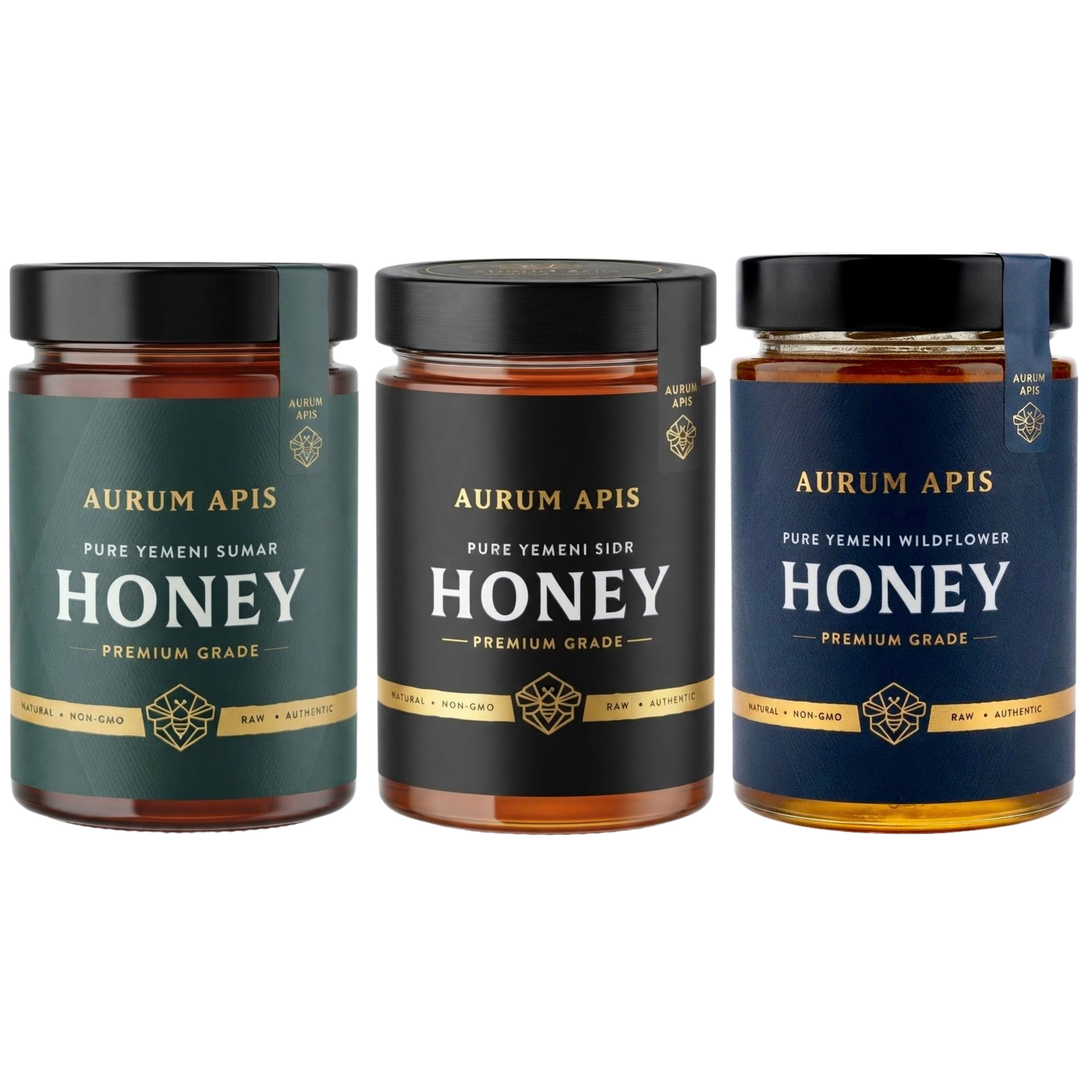
All Aurum Apis honeys are raw and lab-tested. Explore our Yemeni Sidr, Sumar and Wildflower honeys, or our Kyrgyz White, Mountain and Barberry honeys.
Frequently Asked Questions
Is raw honey safe?
Yes, for adults and children over one year old. Like all honey, it should not be given to babies under 12 months.
Why is my raw honey cloudy?
Natural pollen and tiny crystals make raw honey look cloudy. That's normal.
Does processed honey still count as honey?
Yes, if it is pure honey. But heating and filtering change its character, and fine filtering makes its origin harder to check.
Source: Codex Alimentarius – Standard for Honey (CXS 12-1981)