عربة التسوق
0

Honey is a natural sweetener that contains sugars and small amounts of other naturally occurring compounds. Eating a moderate amount may help satisfy a sweet craving and provide quick energy, but honey is still a source of sugar and should be consumed in moderation.
What happens when you eat honey every day? The effects depend on how much you eat, your overall diet, your activity level and your individual health. Honey can be part of a balanced diet, but eating it daily does not automatically improve immunity, cause weight loss or prevent disease.
In this guide, we explain the potential benefits of eating honey, its nutritional value, daily consumption considerations and important safety precautions.
1. Honey Provides a Quick Source of Energy
Honey contains naturally occurring sugars, mainly glucose and fructose. These carbohydrates provide energy that the body can use.
A small amount of honey can be used to sweeten breakfast foods, yogurt or a drink. Some people also use it as a source of carbohydrates before or after physical activity.
However, honey is not a substitute for a balanced meal. It does not provide the same combination of protein, healthy fats, fibre, vitamins and minerals found in a varied diet.
Key takeaway: Honey provides quick energy because it contains carbohydrates, but more honey does not necessarily mean more health benefits.

2. Honey Can Help Satisfy a Sweet Craving
If you enjoy sweet foods, honey can be one way to add sweetness to your meals.
For example, you can use a small amount in plain yogurt, oatmeal or homemade salad dressings. Its distinctive flavour may allow you to enjoy a food without adding a large quantity.
However, honey is not sugar-free. If you add honey to your diet without reducing other sources of sugar, your total sugar and calorie intake may increase.
Key takeaway: Honey can be a useful sweetening ingredient, but portion size still matters.
3. Honey Contains Naturally Occurring Compounds
Honey contains small amounts of compounds such as polyphenols and other substances that vary according to its floral source, origin and processing.
Some of these compounds have been studied for their antioxidant activity. However, the presence of antioxidant compounds does not establish that eating honey every day prevents a disease or produces a specific health outcome.
Different honey varieties can have different compositions. Their colour, aroma, flavour and other characteristics depend on several factors, including the plants from which the nectar originates.
Key takeaway: Honey's composition varies by variety, and laboratory findings should not be treated as proof of specific health benefits in humans.
4. Honey May Soothe a Cough
Honey has been studied as a home remedy for cough associated with some upper respiratory infections. Evidence suggests that it may help relieve acute cough symptoms, particularly in children older than one year.
It is important to understand that honey does not cure the underlying infection and should not replace medical assessment when symptoms are severe, persistent or worsening.
Important safety warning: Never give honey to a baby younger than 12 months because it can cause infant botulism, a serious illness.
For people with ongoing symptoms, breathing difficulties or other concerning signs, seek appropriate medical advice.
5. Eating Honey Every Day Does Not Automatically Improve Digestion
Honey is sometimes promoted as a remedy for digestive problems. However, evidence does not establish that eating ordinary honey every day reliably improves digestion in everyone.
If you experience bloating, constipation, abdominal pain or other digestive symptoms, the cause may require a more specific approach.
Adding honey to a drink may change its flavour, but this should not be confused with a proven treatment for digestive conditions.
Key takeaway: Do not rely on honey to diagnose, prevent or treat persistent digestive problems.
6. Is Honey Helpful for Weight Management?
Honey is sometimes marketed as a weight-loss food, but there is no good reason to assume that adding honey to your diet will cause weight loss.
Honey contains calories and sugars. Replacing another sweetener with honey may change the flavour of a meal, but it does not make the meal calorie-free.
Weight management depends on several factors, including total energy intake, physical activity, sleep and individual health circumstances.
If your goal is to manage your weight, pay attention to portion sizes and your overall eating pattern rather than relying on honey as a weight-loss remedy.
Key takeaway: Honey is not a proven shortcut to weight loss.
7. What Happens If You Eat Too Much Honey?
Although honey is a natural product, excessive consumption can increase your intake of free sugars and calories.
Regularly consuming more sugar than you need may make it harder to maintain a balanced diet. Frequent exposure to sugary foods and drinks can also contribute to tooth decay.
The amount that is appropriate for you depends on your overall diet, energy needs and health circumstances.
People with diabetes or other conditions requiring blood glucose management should be especially mindful of honey's carbohydrate content.
Key takeaway: Natural origin does not mean unlimited consumption is beneficial.
How Much Honey Should You Eat Every Day?
There is no single daily amount of honey that is ideal for everyone.
A sensible approach is to treat honey as an added sweetener and account for it within your overall sugar intake. Consider your usual diet, activity level, health needs and the other sweet foods and drinks you consume.
For general context, the World Health Organization recommends keeping free sugars below 10% of total daily energy intake and suggests that reducing them below 5% may provide additional health benefits. Honey's sugars count as free sugars under this guidance.
This recommendation applies to total free sugars from all sources, not just honey.
If you have diabetes or have been advised to manage your carbohydrate intake, ask your healthcare professional how honey fits into your individual eating plan.
Is Honey Healthier Than Refined Sugar?
Honey and table sugar are both sources of sugar. They differ in composition, flavour and how they are used in food, but neither should be treated as a sugar-free or unlimited-consumption option.
Honey contains a mixture of sugars and small amounts of other compounds, while table sugar is primarily sucrose.
| Feature | Honey | Table sugar |
|---|---|---|
| Main role | Sweetener | Sweetener |
| Sugar content | Mainly glucose and fructose, with other components | Primarily sucrose |
| Flavour | Varies by floral source | Relatively neutral |
| Other compounds | Small amounts of naturally occurring compounds | Primarily sucrose |
| Daily consumption | Should be moderated | Should be moderated |
The best choice depends on your taste preferences and how the sweetener fits into your overall diet. Replacing table sugar with honey does not eliminate the need to limit free sugars.
Does the Type of Honey Matter?
Honey varieties differ in flavour, colour, aroma and composition.
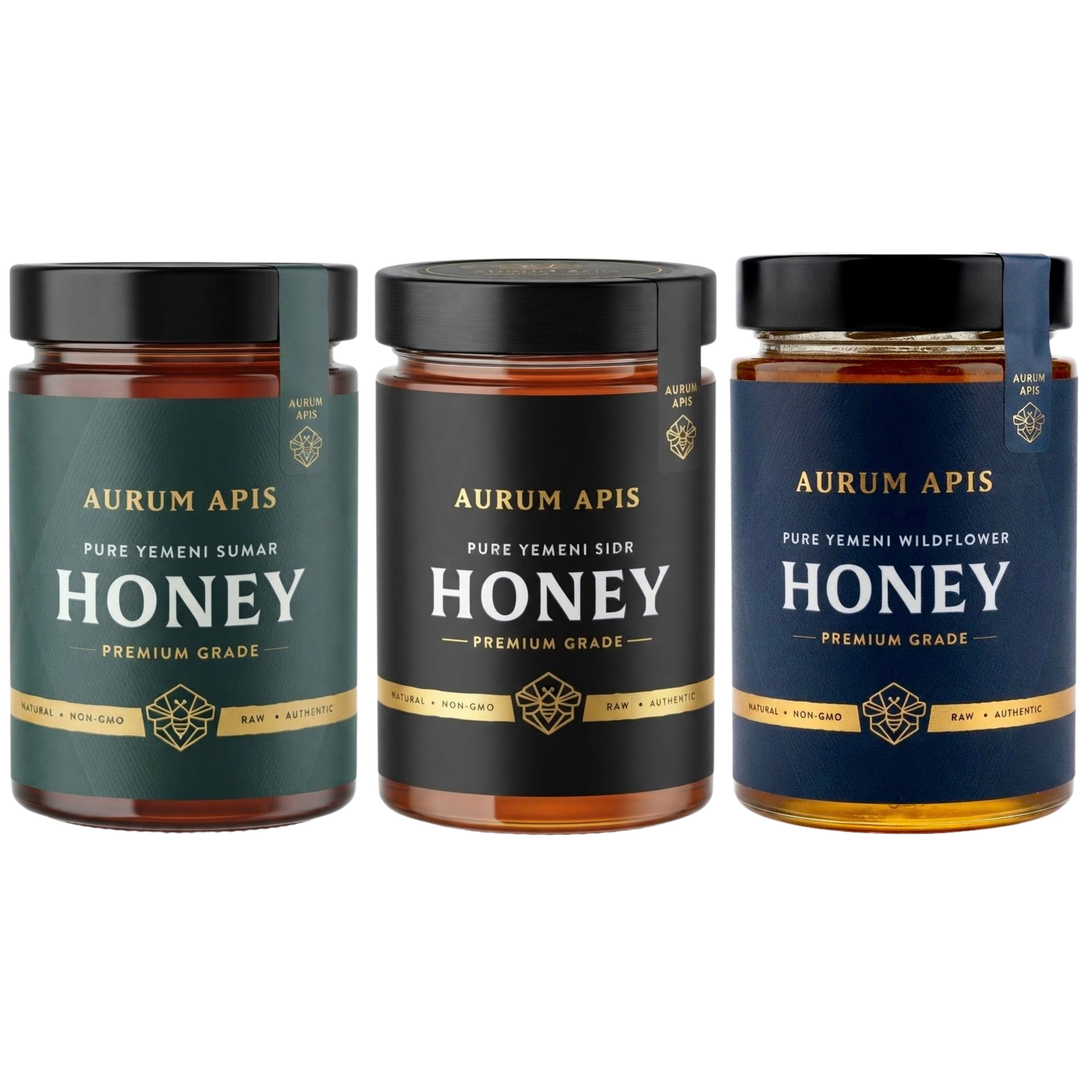
For example, Yemeni Sidr, Yemeni Sumar, Yemeni Wildflower and Kyrgyzstani White Honey offer different sensory characteristics. Their differences can make them suitable for different culinary preferences.
However, a honey's origin, colour or premium price does not by itself prove that it produces superior medical outcomes. Claims about purity, organic certification and quality should be supported by appropriate documentation.
When choosing honey, consider its ingredient information, origin, quality documentation and suitability for your intended use.
At Aurum Apis, you can explore different honey varieties and compare their characteristics to find one that suits your preferences.
Who Should Be Careful About Eating Honey?
Honey is not suitable for every person in every situation.
-
Babies under 12 months: Never give honey to infants because of the risk of infant botulism.
-
People with diabetes: Honey contains carbohydrates and can affect blood glucose. Discuss suitable portions with your healthcare professional.
-
People managing sugar intake: Include honey in your overall free-sugar intake rather than treating it as a sugar-free alternative.
-
People with allergies: If you experience a suspected allergic reaction after consuming honey, seek appropriate medical advice. Severe allergic symptoms require emergency care.
Honey should be considered a food, not a replacement for prescribed medication or professional medical treatment.
Final Thoughts: Should You Eat Honey Every Day?
Honey can be enjoyed as part of a balanced diet. It provides carbohydrates, adds flavour to food and may help soothe some cough symptoms, but it remains a source of sugar.
The most important considerations are portion size, your overall diet and your individual health needs. Be cautious of claims that honey automatically improves immunity, causes weight loss or prevents disease.
If you enjoy premium honey, choose a variety that suits your taste and intended use, and consume it in moderation.
Health information note: This article is for general educational purposes and is not a substitute for personalised medical advice.
Frequently Asked Questions
What happens when you eat honey every day?
Eating honey every day adds sugars and calories to your diet. In moderate amounts, it can be used as a sweetener and provide a quick source of energy. Its overall effects depend on portion size, diet and individual health.
Is it good to eat honey every morning?
Honey can be eaten in the morning if it fits your dietary needs and preferences. There is no strong evidence that eating it at a particular time provides unique health benefits compared with consuming it at other times.
Can I eat honey on an empty stomach?
There is no established evidence that eating honey on an empty stomach provides special health benefits. You can choose how to include it in your diet according to your preferences and tolerance.
Does honey increase blood sugar?
Yes. Honey contains carbohydrates, including glucose and fructose, and can affect blood glucose levels. People with diabetes should account for its carbohydrate content.
Is honey better than white sugar?
Honey has a different sugar composition and flavour from table sugar, but both contribute to free-sugar intake. Neither should be consumed without regard to portion size.
Can honey help with a cough?
Honey may help relieve some acute cough symptoms, but it does not cure the underlying illness. Never give honey to children younger than 12 months.
Which type of honey should I choose?
Choose a variety based on its flavour, intended use, ingredient information and verifiable quality documentation. No particular variety should be assumed to provide superior medical benefits without reliable supporting evidence.