Cart
0

Have you ever wondered why two jars of natural honey can look, smell and taste completely different? The answer lies in their floral sources, origins and natural characteristics. A honey tasting experience is a simple way to discover these differences and appreciate the variety of flavours that nature offers.
Whether you are exploring honey for yourself, planning a relaxed gathering with friends or looking for an interesting gift experience, tasting six different varieties can turn an everyday ingredient into something special. With a few spoons, tasting glasses and a little preparation, you can explore six distinctive honeys from Yemen and Kyrgyzstan. Here is how to organise your own tasting experience at home using this collection of six distinctive honeys.
Prepare Your Honey Tasting Setup
A good tasting experience starts with a clean and comfortable setup. You do not need professional equipment or special training. A simple table arrangement is enough to enjoy and compare different varieties.
Before beginning, gather these essentials:
-
Six small bowls or tasting glasses.
-
Six clean teaspoons or tasting spoons.
-
A glass of room-temperature drinking water.
-
Plain crackers or a small piece of neutral bread.
-
A notebook or tasting sheet.
-
Small labels to identify each honey.
-
A white plate or surface to observe honey colours.
Place each honey in a separate bowl and label it with its name and origin. Keep the tasting area free from strong perfumes, scented candles and strongly flavoured foods, as these can influence how you experience aromas.
Allow the honey to reach a comfortable serving temperature. Avoid heating it, as warmth can change its natural texture and aroma.
For a more enjoyable experience, invite friends or family members to participate. Everyone can describe what they notice and compare their impressions.

Understand the Six Honeys Before Tasting
Before sampling, take a moment to understand where each variety comes from. The origin and floral sources of honey contribute to its individual colour, aroma, consistency and flavour.
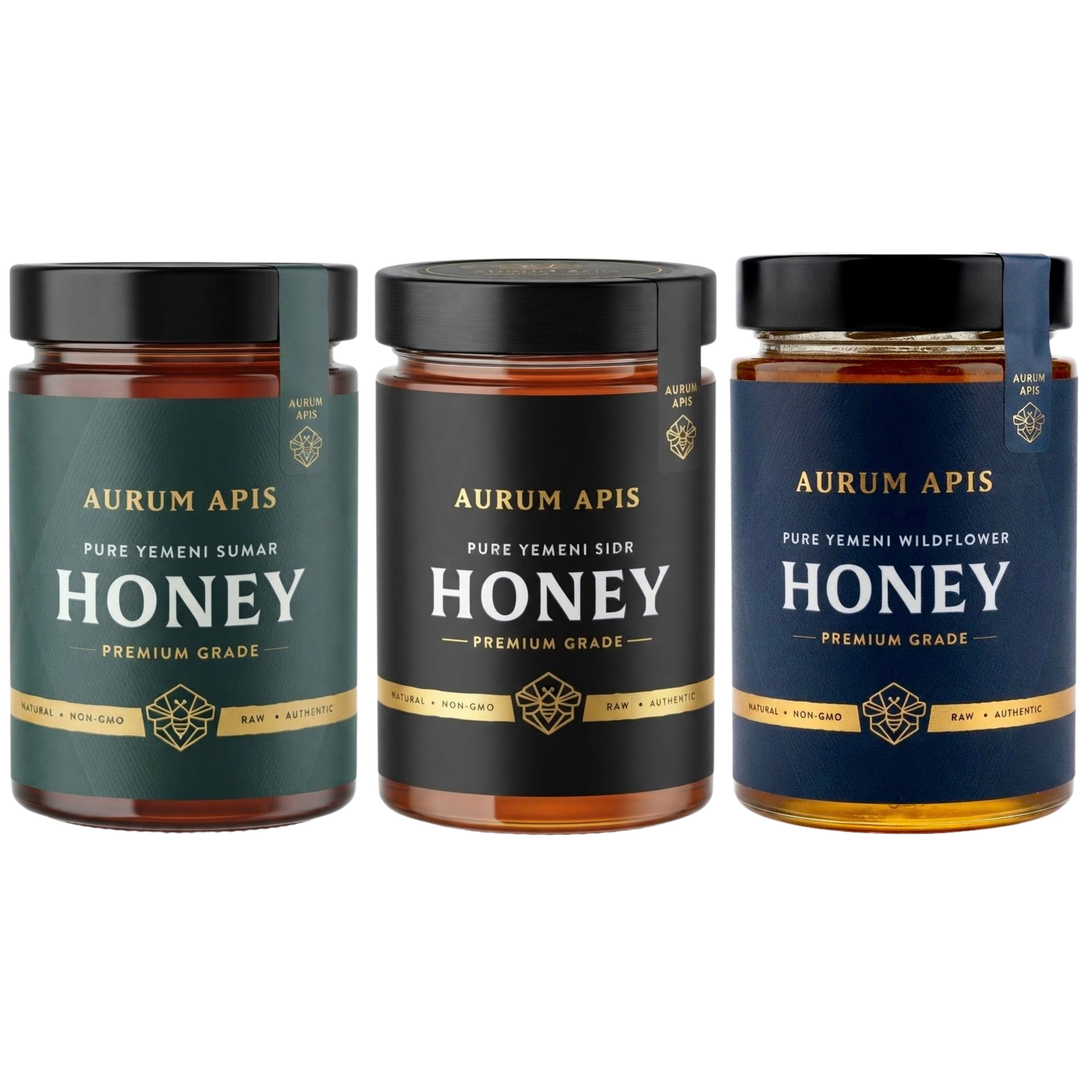
Aurum Apis brings together six varieties from two distinctive regions.
| Honey variety | Origin | What to explore |
|---|---|---|
| Sidr | Hadhramaut, Yemen | Colour, aroma and flavour depth |
| Sumar | Hadhramaut, Yemen | Distinctive aroma and taste |
| Wildflower | Yemen | Floral character and flavour |
| White | Tien Shan mountains, Kyrgyzstan | Pale appearance and delicate character |
| Mountain | Tien Shan mountains, Kyrgyzstan | Texture and flavour profile |
| Barberry | Tien Shan mountains, Kyrgyzstan | Colour, aroma and individual taste |
Each variety offers a different tasting experience. Rather than deciding which one is best immediately, approach every sample with curiosity.
The purpose is to discover your personal preferences and understand how different origins create different tasting experiences.
Follow These Six Steps to Taste Honey Properly
The most enjoyable way to compare different honeys is to follow the same tasting process for every sample. This helps you notice small differences without rushing through the experience.
Step 1: Observe the Colour
Start by looking at the honey against a white background.
Notice whether it appears pale, golden, amber or darker in colour. Some varieties have a lighter appearance, while others display deeper golden tones.
Hold the tasting glass against natural light if possible. Look at the clarity and overall appearance without making assumptions about quality based on colour alone.
Write down your observations before moving to the next sample.
Step 2: Notice the Aroma
Bring the spoon or tasting glass closer and gently smell the honey.
Pay attention to its natural aroma. Does it seem floral, delicate, warm, woody or rich?
There is no single correct description. Different people may recognise different notes in the same honey.
Take your time with each sample. A gentle smell before tasting can help you notice characteristics that might otherwise go unnoticed.
Step 3: Examine the Texture
Place a small amount on your spoon and observe how it moves.
Some honeys may appear smoother, while others may feel thicker or have a different consistency.
Notice how the honey sits on the spoon and how easily it moves when you tilt it slightly.
Texture is an important part of the overall tasting experience. However, consistency alone does not determine whether honey is genuine or of higher quality.
Step 4: Taste a Small Amount
Now comes the most enjoyable part.
Take a small spoonful and let it sit briefly on your tongue. Notice the first impression, followed by the flavour that develops.
Consider these questions:
-
Is the flavour delicate or pronounced?
-
Does it taste floral, warm or rich?
-
Is the sweetness gentle or more noticeable?
-
Does the flavour remain after swallowing?
-
What makes this sample different from the previous one?
Try not to rush. Allow yourself enough time to appreciate each variety.
Step 5: Compare the Flavour Profiles
After tasting each sample individually, begin comparing them.
Think about the differences in aroma, sweetness, texture and overall flavour.
For example, you may prefer a lighter-tasting variety for breakfast, while another may appeal to you as a pairing for cheese or desserts.
There is no universal winner. The most enjoyable honey is simply the one that suits your personal taste.
Step 6: Record Your Favourite
Give each variety a simple rating based on your own experience.
You can use a scale from one to five for:
-
Appearance
-
Aroma
-
Texture
-
Flavour
-
Overall preference
Keep your notes so you can remember which varieties you enjoyed most.
This also makes honey tasting a fun activity to repeat with family and friends.
Shop the Set: Explore Six Distinctive Honey Varieties
<escape> </escape>
If you want to experience all six varieties without purchasing separate jars individually, Aurum Apis brings them together in one carefully presented collection.
The complete six-variety tasting set gives you an opportunity to explore honey from two distinctive regions: Hadhramaut in Yemen and the Tien Shan mountains in Kyrgyzstan.
Each variety has its own characteristics, making the collection particularly interesting for anyone who enjoys discovering new flavours.
The collection is also a thoughtful choice for:
-
Family tasting evenings.
-
Dinner parties and special gatherings.
-
People who enjoy exploring different food origins.
-
Friends who appreciate distinctive gourmet ingredients.
-
Special occasions where a selection offers more variety than a single jar.
Aurum Apis offers raw honey without additives or preservatives, and its products are lab-tested.
You can also explore the Yemeni honey collection or discover the Kyrgyz honey selection if you would prefer to focus on one origin.
How to Pair Different Honeys with Everyday Foods
Once your tasting session is complete, explore how different varieties work with everyday foods.
Honey is a versatile ingredient that can be enjoyed in several ways. Pairing it with simple foods can help you discover new flavour combinations.
Here are a few ideas:
With cheese: Try a small drizzle of honey over a mild or mature cheese. The contrast between the cheese's savoury flavour and the honey's sweetness can make an interesting combination.
With fresh bread: Spread a little honey over plain toast, sourdough or fresh bread. This is an easy way to appreciate its natural flavour.
With yoghurt: Add a small spoonful to plain yoghurt for a simple breakfast or snack.
With fresh fruit: Pair honey with sliced apples, pears or strawberries. The fruit provides a different flavour and texture alongside the sweetness.
With desserts: Use honey as a finishing drizzle over pancakes, waffles or simple desserts.
Experiment with different combinations and make a note of the pairings you enjoy most.
How to Store Honey After Your Tasting Session
Proper storage helps maintain the natural characteristics of honey after opening.
Follow these simple practices:
-
Keep honey in a clean, tightly sealed container.
-
Store it in a cool, dry place.
-
Keep it away from direct sunlight.
-
Always use a clean, dry spoon.
-
Avoid introducing water or food particles into the jar.
-
Follow the product's storage instructions.
Honey can naturally change its consistency over time. These changes are part of its natural characteristics and do not automatically indicate a problem.
Avoid unnecessary heating when serving or storing your honey. Keeping the jars properly sealed and protected from moisture is a simple way to care for them.
Discover Six Honeys with Aurum Apis
Honey tasting is more than simply trying something sweet. It is an opportunity to explore different origins, compare natural colours and textures, and discover flavours that suit your preferences.
With six varieties from Yemen and Kyrgyzstan, Aurum Apis makes it easy to bring this experience into your home. Whether you are organising a tasting evening, exploring new food pairings or choosing a thoughtful present, you can order the complete collection of six honeys and enjoy discovering each variety.
Aurum Apis offers delivery across the UAE, bringing distinctive raw honey selections to your doorstep.
Start your tasting experience and discover which of the six varieties becomes your favourite.
FREQUENTLY ASKED QUESTIONS
What is the best way to taste honey?
The best approach is to examine each sample separately. Start by observing its colour, then notice its aroma and texture before tasting a small spoonful. Pay attention to sweetness, flavour and the finish. Use water between samples to refresh your palate and record your observations for easier comparison.
How many types of honey should you taste in one session?
Six varieties make an enjoyable tasting session because they offer enough diversity for meaningful comparisons without making the activity too complicated. You can explore their colour, aroma, texture and flavour at your own pace. A six-variety collection from different regions is a convenient starting point for beginners.
Why do different honeys have different colours and flavours?
Honey characteristics vary according to floral sources, geographical origin and other natural factors. Different plants contribute different characteristics to the honey produced from their nectar. This is why samples can range from pale to deep amber, with variations in aroma, sweetness, texture and overall flavour.
What should you eat between honey tastings?
Room-temperature drinking water is a simple choice for refreshing your palate. You can also use a small piece of plain bread or an unsalted cracker between samples. Avoid strongly flavoured foods, spicy dishes and scented drinks during the tasting, as they can influence how you experience the next variety.
Is a six-variety honey collection a good gift?
A collection of six different honeys can be a thoughtful gift for people who enjoy food discovery and distinctive flavours. It offers an opportunity to explore different origins and compare individual varieties. It is suitable for family gatherings, celebrations, special occasions and anyone who appreciates natural gourmet ingredients.